
You're in the right place
Crisis Services
are here for you.
Whether you're the one struggling or someone you love is in crisis, DWIHN's crisis team is available every hour of every day. You don't need insurance, a referral, or an appointment. You just need to reach out.
If you are struggling yourself: This is a safe place. Nothing you say will be used against you. Real people answer this line, no robots, no hold music.
If someone you love is in crisis: You don't have to figure this out alone. We'll tell you exactly what to do, step by step. You calling is already the right move.
ACCESS & Crisis Line
1-800-241-4949Free · Confidential · Wayne County
Call ACCESS to reach crisis counselors, schedule services, or request a mobile team. A telephonic screen may be utilized to connect you to the right level of care.
Your options
Three ways to get help right now
Call the Crisis Line
A trained counselor answers, usually within 2 minutes. They will listen, assess what is happening, and guide you to the right support. You can stay anonymous.
Walk Into a Crisis Center
Crisis Stabilization Units (CSUs) are open around the clock. Walk in without an appointment and receive immediate support, calmer and more therapeutic than an ED, with up to 72 hours of care.
Request the Mobile Crisis Team
Trained clinicians come to you, your home, school, or wherever you are, to de-escalate, assess, and connect to care. No police involvement unless there is an immediate safety threat.
How the system works
The DWIHN Crisis Continuum
Depending on the level of urgency, there is a clear path to the right level of care, with DWIHN coordinating every step.
The people behind the line
Real people. Trained for this.
DWIHN's crisis team is not a call center. Every person who answers is specifically trained in the DWIHN Crisis Continuum, a structured approach to helping people through behavioral health crises safely and with dignity.
Whether you call at 2pm or 2am, the same standard of care applies. The team includes:
What you can always expect
- No judgment. No lecture. Just support.
- Complete confidentiality, nothing shared without your consent
- Services in English, Spanish, and Arabic
- You can call for yourself or for someone you are worried about
- TDD/TTY accessibility: dial 711
Walk-in alternatives to the ED
Crisis Stabilization Units
CSUs are open 24/7. Walk in without an appointment. Adults and children both welcome. No wait in a chaotic ED waiting room.
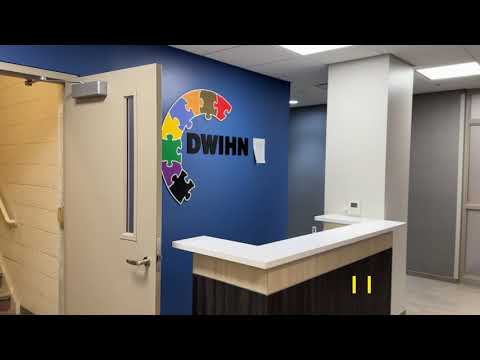
Not a hospital. Not an ED. Something better.
Crisis Stabilization Units are purpose-built for behavioral health crises. They are calm, structured environments, not chaotic emergency departments. You will receive care from trained staff in a space designed around recovery, not triage.
-
Immediate support, up to 72 hours
Stay as long as needed to stabilize. Meals, rest, and continuous care included.
-
Supervised de-escalation
Clinicians and peer support coaches work with you, or your loved one, to get through the acute crisis phase safely.
-
Stabilization and a real plan
You leave with more than just discharge papers, a safety plan, follow-up appointments, and connections to ongoing care.
Wayne County CSU Locations

DWIHN Care Center, Adults & Children
707 W. Milwaukee Ave, Detroit, MI 48202 (313) 989-9444Serves both adults and children. Walk-in welcome. DWIHN headquarters building.
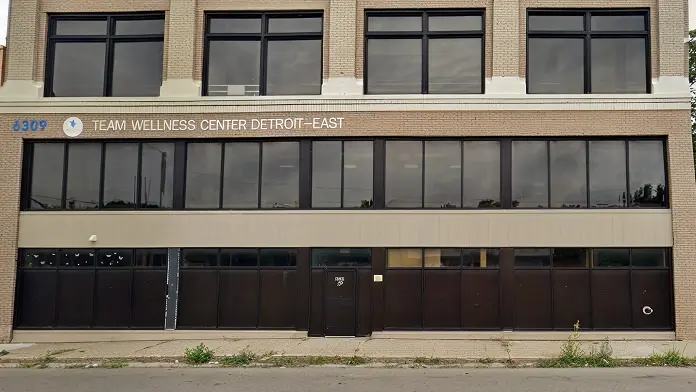
East Detroit Crisis Stabilization Unit
6309 Mack Ave, Detroit, MI 48207 (313) 331-3435
West Wayne Crisis Stabilization Unit
34290 Ford Rd, Westland, MI 48185 (313) 391-2753No surprises
What will actually happen
Knowing what to expect removes fear. Here is exactly how each type of contact works, step by step.
A real person answers
No automated menus. No hold music. A trained crisis counselor picks up, typically within 1–2 minutes. They will greet you calmly and let you talk.
They will ask gentle questions
They may ask your first name (completely optional), what is happening, and roughly where you are if you want someone dispatched. Nothing you say is recorded for legal purposes or used against you.
A telephonic screen may be utilized to assess your needs and connect you to the right level of care.
Together you will decide next steps
They might stay on the phone with you, send a mobile team, refer you to a CSU, or connect you to ongoing services, based entirely on what you need right now.
You stay in control
You can end the call any time. You do not have to accept any service they offer. The goal is to give you information and support, not to pressure you.
Walk in any time, no paperwork needed to start
You will be greeted at reception. You can say as little as "I need help." That is enough. You do not need an ID, insurance card, or appointment.
A clinician will meet with you privately
You will speak with a licensed clinician who will assess what is happening and what level of support is right, in a private, calm room.
You may stay up to 72 hours
If needed, you can stay in the CSU through the acute phase of the crisis. Meals are provided. Staff are available continuously. It is a place to breathe and stabilize.
Discharge means a real plan, not just a goodbye
When you leave, you will have a written safety plan, follow-up appointment times, and connections to the ongoing services you need.

What to Expect as a Guest at 707 W. Milwaukee
The DWIHN Care Center is a calm, structured environment, not a hospital ward. Here is what the experience is actually like:
- Staff will greet you at the door. Press the intercom button if the door is locked, someone will let you in right away.
- Your phone and personal belongings are stored securely in a locker during your stay. You will receive your items back at discharge.
- Meals are provided. Staff are available around the clock. You can rest without worry.
- You may stay up to 72 hours while the acute phase of your crisis passes.
- Family members can call the main line and use a visitor code word to check on your status, protecting your privacy while keeping loved ones informed.
What to bring
- Photo ID (if you have one, not required to receive care)
- Medicaid/insurance card (if applicable, no insurance is needed)
- List of current medications (if possible)
- Emergency contact name and phone number
- Comfortable clothing if you plan to stay overnight
Two trained clinicians arrive, not police
The mobile team consists of a licensed mental health clinician and a peer support specialist who has lived experience with crisis. They arrive in an unmarked vehicle to minimize stigma or fear.
They assess and de-escalate on-site
They will speak with the person in crisis privately if appropriate, assess safety, and work to bring the situation to a calmer state. Family members are included in the conversation.
They arrange what comes next
Transport to a CSU if needed, a safety plan, a same-day appointment, or a follow-up call. They do not just de-escalate and leave, they stay until there is a clear path forward.
The mobile team can only deploy if there are no immediate safety concerns (such as weapons). If there are active threats, call 911 first, you can then contact DWIHN to have a clinician coordinate alongside law enforcement.
ED staff will contact DWIHN's PAR team
If a DWIHN member arrives at an emergency department in behavioral health crisis, ED staff will call the DWIHN Pre-Admission Review (PAR) Dispatch team at (313) 696-0905.
A DWIHN clinician is dispatched to the hospital
A trained behavioral health clinician will come to the ED to conduct a comprehensive crisis assessment, separate from the ED's medical evaluation.
They coordinate the appropriate level of care
Based on the assessment, the DWIHN clinician will coordinate the right next step, whether that is a CSU, inpatient admission, or outpatient services.
You do not need to arrange this yourself. ED staff are trained to initiate DWIHN contact. If you are a family member at the ED, you can ask the staff to call DWIHN's PAR Dispatch: (313) 696-0905.
For the people who love them
You showed up.
That already matters.
Watching someone you love struggle with a behavioral health crisis is one of the hardest things a person can do. You are probably exhausted, scared, and second-guessing yourself.
Please hear this: you are not the cause of this. You cannot fix it by loving harder. But you can help them access the support that does work, and you deserve support too.
"I didn't know what to say when my daughter was in crisis. I called DWIHN and the counselor spent 20 minutes coaching me on exactly what to do. I didn't feel alone in it anymore."— Mother of a DWIHN member, Detroit
"My brother had been struggling for years. I kept thinking if I just said the right thing he'd get better. The peer coach at DWIHN helped me understand that wasn't how it worked, and that I needed support too."— Family member, Westland

Grace Wolf
VP of Crisis Services
Grace and her team believe that crisis is not a failure — it is a moment that demands a compassionate, skilled response. Every call, every walk-in, every mobile outreach is an opportunity to meet someone exactly where they are and open a door to recovery.
No one should have to face a crisis alone. Our job is to make sure they never have to.
Guides & Directories
Resources to keep and share
Download these guides for yourself, for a family member, or to share with someone who might need them.
Common questions
Things people often wonder
-
This is the most common thing families ask. You cannot force an adult to accept help, but you can remove barriers, stay present, and keep the door open. Call our crisis line and ask about the ARISE intervention model: a family-led approach that brings people into treatment voluntarily about 80% of the time.
-
No. Calling DWIHN's crisis line (1-800-241-4949) or the mobile crisis team (1-844-462-7474) dispatches mental health clinicians, not law enforcement. Police are only involved if you request it or if there is an immediate safety threat.
-
No. Crisis services are free to all Wayne County residents regardless of insurance status. DWIHN manages publicly funded behavioral health care, meaning Medicaid recipients, uninsured people, and underinsured individuals are all served. You will never be turned away at a CSU for inability to pay.
-
A Crisis Stabilization Unit is a voluntary, short-term (up to 72 hours), non-hospital facility designed specifically for behavioral health crises. It is calmer and less clinical than an inpatient psychiatric ward. You are not "admitted" in the medical sense, you can leave voluntarily.
-
DWIHN has specialized crisis services for children and adolescents. The DWIHN Care Center at 707 W. Milwaukee accepts walk-ins for both adults and children. Crisis line staff are trained in youth crisis response. Child Crisis Services Directories are available to download in English, Spanish, and Arabic.
-
Yes, absolutely. You do not need to be in an active crisis to call. If you are having thoughts of suicide, even passive thoughts, that is exactly what this line is for. You do not have to be at a breaking point. Earlier is always better. The counselors will not overreact, and calling will not automatically result in police or hospitalization.
-
Crisis services are available in English, Spanish, and Arabic. Child crisis service directories are available to download in all three languages. TDD/TTY users can dial 711. If you need a different language, tell the counselor who answers, DWIHN works with interpretation services to accommodate additional languages.
Someone is ready to help right now.
Free · Confidential · Wayne County · Every hour of every day