Provider Operations

Utilization Management & Claims

Prior authorizations, claims submission, and billing resources for all DWIHN network providers — including Medicaid, SUD, Autism, and HIDE-SNP lines of business.

4 LinesMedicaid · SUD · Autism · HIDE-SNP
Prior AuthService Authorization Requests
Self-DirectionMember-Directed Services

Claims and authorization resources for all active DWIHN network providers.

What We Cover

Key Provider Operations

Authorization processing, claims management, and self-directed services support for every provider in the DWIHN network.

  • Prior Authorization

    Submit and track service authorization requests across all four lines of business. 99% standard approval rate with average 3.2-day turnaround.

  • Claims Submission

    Electronic and paper claims processing for Medicaid, SUD, Autism, and HIDE-SNP. Reconsideration support and billing guidance available.

  • Self-Direction

    Support for providers delivering member-directed services. Work with Financial Management Service Agencies and understand your role in person-centered care.

Our Commitment

Utilization Management Affirmative Statement

All DWIHN, Crisis Service Vendors, and Access Center practitioners and employees who make Utilization Management decisions understand the importance of ensuring that all consumers receive clinically appropriate, humane and compassionate services.

  • Utilization Management decision-making is based only on appropriateness of care, service, and existence of coverage.
  • DWIHN, The Access Center, and Crisis Service Vendors do not reward practitioners or other individuals for issuing denials of coverage or service care.
  • No physicians nor any other staff making UM decisions are rewarded for issuing denials of coverage or service or reducing the provision of care which is deemed medically necessary.

Questions about UM decisions?

Our UM team can assist with authorization questions, appeal processes, and clinical review inquiries.

Contact UM Team

Member-Directed Services

Self-Determination

As a provider within DWIHN, it is important to understand the principles of Self-Determination (SD) and how Self-Directing Services may impact your role in supporting members.

Self-Determination Team

For questions about self-directing services, eligibility, or the process for becoming a self-direction provider.

Email SD Team

Self-Direction

Working with Financial Management Service Agencies

Providers delivering services under a self-directed arrangement via a Direct Hire or Purchase of Service model will receive payment via the member's chosen FMS Agency.

These agencies manage issuing payments to providers on behalf of the member and maintaining records and ensuring compliance with Medicaid billing requirements.

Key Takeaways for Providers

Flexibility

Self-direction may bring opportunities to work with members in a more personalized, tailored way.

Compliance

You must meet all Medicaid provider qualifications — regardless of whether you are in or out of the DWIHN network.

Collaboration

Effective communication with the member, Support Coordinator, and FMS Agency is essential for success.

Get Involved

Self-Directing Services Welcome Meetings

What They Are

An opportunity to ask questions or seek general information about Self-Directing Services, discuss the implementation process, meet with families to review/sign SD Agreements, and get targeted training on goal statement/objective/intervention development.

Who Should Come

Support Coordinators, Case Managers, Members, Family of Members, or anyone with questions about Self-Directing Services.

Meeting Schedule

  • Monday — 4:00 PM
  • Tuesday — 1:00 PM
  • Wednesday — 12:00 PM
  • Thursday — 10:00 AM

To attend, reach out to the SD Team at Selfdetermination@dwihn.org.

Performance Data

Authorization Metrics

2025 utilization management performance data for DWIHN network providers.

Approvals

  • Standard prior authorization approval rate99%
  • Timeframe extensions approved0%
  • Expedited authorization approval rate99%

Denials

  • Standard denials1%
  • Expedited denials1%

Appeals

  • Standard requests approved after appeal32.6%

Timeliness

  • Standard authorization average3.2 days
  • Standard authorization median0 days
  • Expedited authorization average16.5 hours
  • Expedited authorization median11 hours

Billing & Claims

Claims Management

Claims Management processes claims for contracted and non-contracted providers. Claims are submitted electronically and via paper for services rendered. Claims are processed for four lines of business: Medicaid, Substance Use Disorder (SUD), Autism, and HIDE-SNP.

Claims personnel work closely with other units such as Office of Fiscal Management (Finance), Utilization Management, MCO, Quality, Compliance, and Information Technology to ensure a smooth process for paying out claims.

(313) 344-9099 (ask for Claims Unit)
707 W. Milwaukee St, Detroit, MI 48202 — Attention: Claims Unit

Claims Reconsideration

If a claim has been denied or requires reconsideration, download the reconsideration form and submit it to the Claims Unit.

Download Form (XLSX)
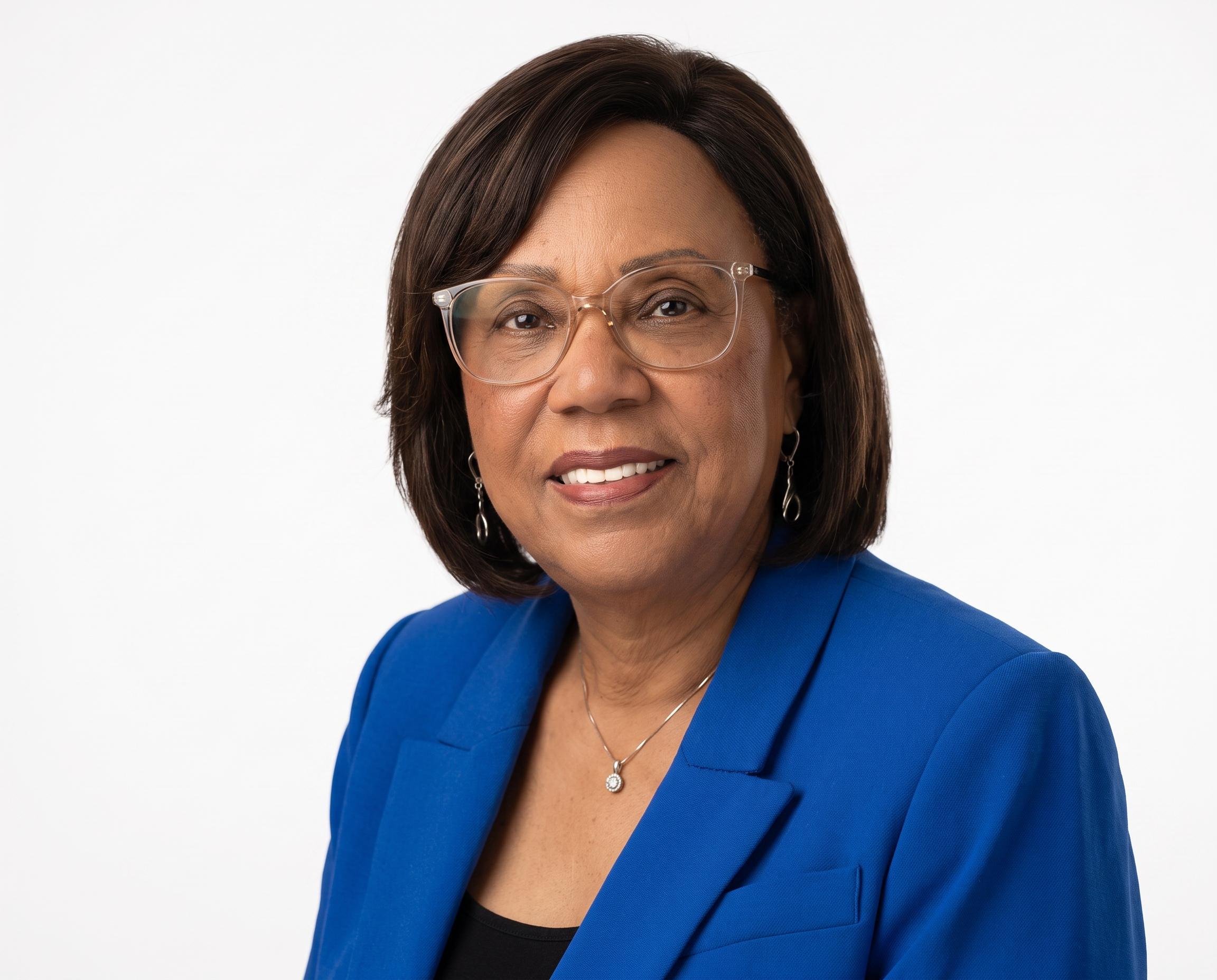
Marlena J. Hampton, Director of Utilization Management at DWIHN

Marlena J. Hampton

Director of Utilization Management

Marlena J. Hampton leads the Utilization Management department, overseeing authorization reviews, level-of-care determinations, and the clinical review processes that ensure members receive the right care at the right time. With a background in clinical counseling and managed behavioral health, Marlena brings a person-centered approach to UM — working closely with providers, clinical teams, and MCO partners to remove barriers and support timely access to services.

Every authorization decision we make has a real person behind it. Our job is to make sure that person gets the care they need — without unnecessary delays or barriers.

Medical necessity criteria used in utilization review can be requested here: PIHPAuthorizations@dwihn.org

UM & Claims Support

Need help with an authorization or claim?

Our Utilization Management team can assist with denied authorizations, claims status inquiries, and billing questions. Reach out before timely filing deadlines.
Provider Support

Provider Support Services

Dedicated support for all active DWIHN network providers, credentialing, billing, clinical consultation, and contract questions handled by our Provider Relations team.

CredentialingEnrollment & Re-enrollment
ContractsPIHP & CMHSP Agreements
PolicyStatPolicies & Procedures Database

Support available to all active DWIHN network providers across Wayne County.

What We Provide

Core Support Areas

From your first enrollment application to ongoing clinical consultation, our team is here to keep your practice supported.

  • Credentialing & Enrollment

    Guidance on initial credentialing, re-credentialing, and enrollment with DWIHN. Includes CAQH profile maintenance and network participation status.

  • Contracts & Policies

    Access your PIHP and CMHSP provider agreements, PolicyStat for current policies and procedures, and contract amendment notices.

  • Clinical & Network Support

    Connect with our clinical consultation team for service authorization guidance, documentation standards, and person-centered care planning support.

Contracts & Agreements

DWIHN & MDHHS Contracts

Welcome to the dedicated page for the Detroit Wayne Integrated Health Network (DWIHN) and Michigan Department of Health and Human Services (MDHHS) contracts. This page provides access to the latest contractual documents and resources for network providers.

Joining the Network

Credentialing Process

Credentialing is the process by which DWIHN verifies that behavioral health providers meet the qualifications to deliver services to individuals with Severe Mental Illness (SMI), Serious Emotional Disturbance (SED), Intellectual/Developmental Disability (I/DD), and Substance Use Disorder (SUD).

Stakeholder Feedback

DWIHN periodically issues notices of proposed policies for stakeholder review and public comment. Submit your feedback through Provider Relations.

Submit Feedback

Policies

To locate active policies while in the PolicyStat database, click on "Policy" at the top of the screen to view the policies listed in alphabetical order. To locate a specific policy, you can also type key words in the search bar.

Access the DWIHN Policy Database (opens in new tab)

Proposed Policies

The Detroit Wayne Integrated Health Network periodically issues notices of proposed policies. These documents inform interested parties of proposed changes in policies.

A Proposed Policy may undergo a public comment period before becoming final. The notices provide a way for interested parties to comment on proposed policies. Viewers may comment by using the electronic feedback form before the comment due date. Notice contents are, in effect, a draft. They do not represent official policy.

Provider Relations Team

Questions? We are here to help.

Our Provider Relations team is your direct contact for credentialing questions, contract clarifications, and any support your practice needs to stay active in the DWIHN network.

You're in the right place

Crisis Services
are here for you.

Whether you're the one struggling or someone you love is in crisis, DWIHN's crisis team is available every hour of every day. You don't need insurance, a referral, or an appointment. You just need to reach out.

If you are struggling yourself: This is a safe place. Nothing you say will be used against you. Real people answer this line, no robots, no hold music.

If someone you love is in crisis: You don't have to figure this out alone. We'll tell you exactly what to do, step by step. You calling is already the right move.

Counselors available right now

24-Hour Crisis & Support Line

1-800-241-4949

Free · Confidential · Wayne County

Call ACCESS to reach crisis counselors, schedule services, or request a mobile team. A telephonic screen may be utilized to connect you to the right level of care.

Your options

Three ways to get help right now

Call the Crisis Line

A trained counselor answers, usually within 2 minutes. They will listen, assess what is happening, and guide you to the right support. You can stay anonymous.

Best for: Any crisis, any time, start here
Call 1-800-241-4949

Walk Into a Crisis Center

Crisis Stabilization Units (CSUs) are open around the clock. Walk in without an appointment and receive immediate support, calmer and more therapeutic than an ED, with up to 72 hours of care.

Best for: When you want to be somewhere safe in person
See CSU locations →

Request the Mobile Crisis Team

Trained clinicians come to you, your home, school, or wherever you are, to de-escalate, assess, and connect to care. No police involvement unless there is an immediate safety threat.

Best for: When leaving is not possible or safe
Call 1-844-462-7474
If someone is in immediate physical danger, call 911. If your loved one goes to an ED, DWIHN's Pre-Admission Review (PAR) team will be dispatched to the hospital to assess and coordinate appropriate behavioral health care. ED staff will contact PAR at (313) 696-0905.

How the system works

The DWIHN Crisis Continuum

Depending on the level of urgency, there is a clear path to the right level of care, with DWIHN coordinating every step.

Not an immediate emergency
Call the ACCESS Line1-800-241-4949
Counselor AssessmentPhone or walk-in
Outpatient ServicesTherapy, medication, peer support
Crisis, but no immediate physical danger
Call Mobile Crisis1-844-462-7474
Team Comes to YouClinician + peer support, unmarked vehicle
CSU or Safety PlanUp to 72 hours stabilization if needed
Immediate life-threatening emergency
Call 911Immediate physical danger to self or others
Emergency DepartmentED staff contacts DWIHN PAR team
DWIHN AssessmentCoordinates CSU or inpatient care

The people behind the line

Real people. Trained for this.

DWIHN's crisis team is not a call center. Every person who answers is specifically trained in the DWIHN Crisis Continuum, a structured approach to helping people through behavioral health crises safely and with dignity.

Whether you call at 2pm or 2am, the same standard of care applies. The team includes:

Crisis Clinicians & CounselorsLicensed mental health professionals who assess, de-escalate, and connect you to care
Peer Support & Recovery CoachesPeople who have been through their own crisis, and understand from the inside what you are going through
Registered Nurses & PsychiatristsMedical staff available for clinical assessment, medication, and higher-level care decisions
Advanced Practice ProvidersNurse practitioners and physician assistants who handle complex clinical needs

What you can always expect

  • No judgment. No lecture. Just support.
  • Complete confidentiality, nothing shared without your consent
  • Services in English, Spanish, and Arabic
  • You can call for yourself or for someone you are worried about
  • TDD/TTY accessibility: dial 711

Walk-in alternatives to the ED

Crisis Stabilization Units

CSUs are open 24/7. Walk in without an appointment. Adults and children both welcome. No wait in a chaotic ED waiting room.

DWIHN Crisis Stabilization Unit video thumbnail

Not a hospital. Not an ED. Something better.

Crisis Stabilization Units are purpose-built for behavioral health crises. They are calm, structured environments, not chaotic emergency departments. You will receive care from trained staff in a space designed around recovery, not triage.

  • Immediate support, up to 72 hours

    Stay as long as needed to stabilize. Meals, rest, and continuous care included.

  • Supervised de-escalation

    Clinicians and peer support coaches work with you, or your loved one, to get through the acute crisis phase safely.

  • Stabilization and a real plan

    You leave with more than just discharge papers, a safety plan, follow-up appointments, and connections to ongoing care.

Wayne County CSU Locations

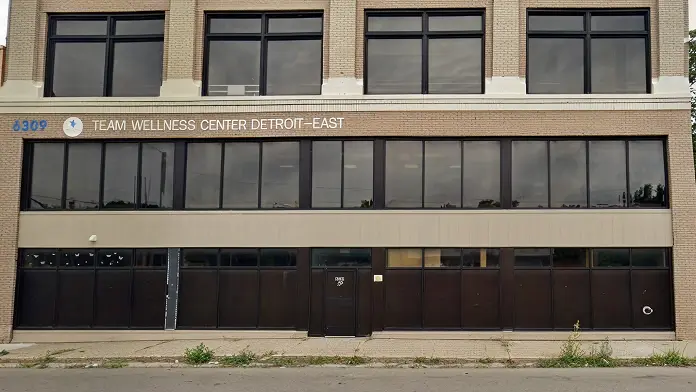
East Detroit Crisis Stabilization Unit exterior
Open 24/7
Team Wellness Center, East

East Detroit Crisis Stabilization Unit

6309 Mack Ave, Detroit, MI 48207
(313) 331-3435
AdultsWalk-in24/7
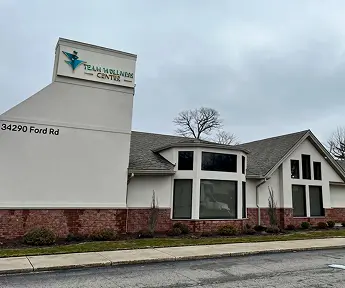
West Wayne Crisis Stabilization Unit exterior
Open 24/7
Team Wellness Center, West

West Wayne Crisis Stabilization Unit

34290 Ford Rd, Westland, MI 48185
(313) 391-2753
AdultsWalk-in24/7

No surprises

What will actually happen

Knowing what to expect removes fear. Here is exactly how each type of contact works, step by step.

1

A real person answers

No automated menus. No hold music. A trained crisis counselor picks up, typically within 1–2 minutes. They will greet you calmly and let you talk.

2

They will ask gentle questions

They may ask your first name (completely optional), what is happening, and roughly where you are if you want someone dispatched. Nothing you say is recorded for legal purposes or used against you.

A telephonic screen may be utilized to assess your needs and connect you to the right level of care.

3

Together you will decide next steps

They might stay on the phone with you, send a mobile team, refer you to a CSU, or connect you to ongoing services, based entirely on what you need right now.

4

You stay in control

You can end the call any time. You do not have to accept any service they offer. The goal is to give you information and support, not to pressure you.

For the people who love them

You showed up.
That already matters.

Watching someone you love struggle with a behavioral health crisis is one of the hardest things a person can do. You are probably exhausted, scared, and second-guessing yourself.

Please hear this: you are not the cause of this. You cannot fix it by loving harder. But you can help them access the support that does work, and you deserve support too.

"I didn't know what to say when my daughter was in crisis. I called DWIHN and the counselor spent 20 minutes coaching me on exactly what to do. I didn't feel alone in it anymore."
— Mother of a DWIHN member, Detroit
"My brother had been struggling for years. I kept thinking if I just said the right thing he'd get better. The peer coach at DWIHN helped me understand that wasn't how it worked, and that I needed support too."
— Family member, Westland
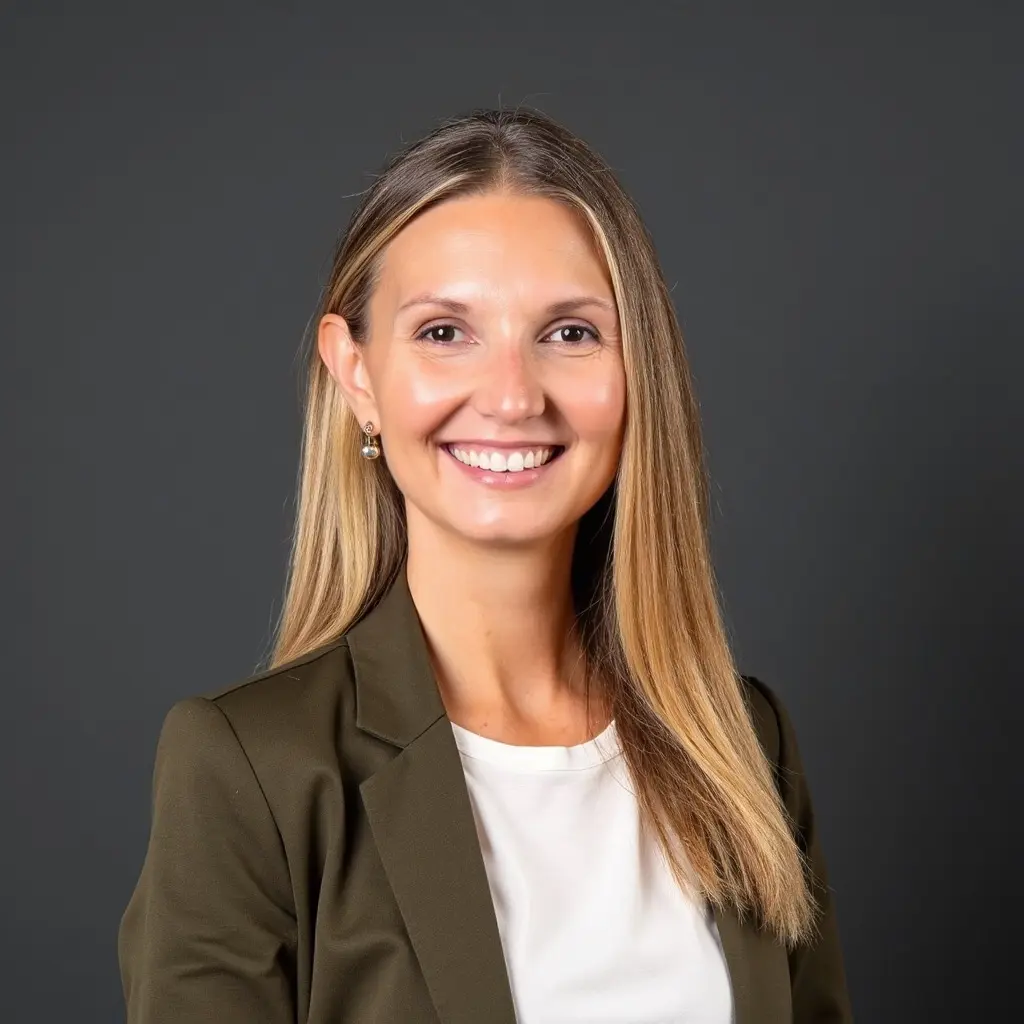
Grace Wolf, Director of Crisis Services at DWIHN

Grace Wolf

VP of Crisis Services

Grace and her team believe that crisis is not a failure — it is a moment that demands a compassionate, skilled response. Every call, every walk-in, every mobile outreach is an opportunity to meet someone exactly where they are and open a door to recovery.

No one should have to face a crisis alone. Our job is to make sure they never have to.

Common questions

Things people often wonder

Someone is ready to help right now.

Free · Confidential · Wayne County · Every hour of every day

Adult Behavioral Health

Mental health care
for every adult.

Treatment, case management, peer support, and recovery services for Wayne County adults 18 and older, from first call to long-term care.

Adults 18+Age Eligibility
Wayne CountyResidency Required
No Wrong DoorWe Help You Get Started

Services are available to eligible DWIHN members. Call to begin, we will connect you.

Adult Mental Health

Taking the first step matters

If you have or think you might have mental health issues, talking about these concerns with others can be helpful. Reaching out for help may be frightening, but it is often the first step toward healing, growth, and recovery.

Having a strong support system and engaging with trustworthy people are essential to recovery. Whether you reach out to a provider, a family member, or a peer, you do not have to face this alone.

How to Build Your Support System

Find someone you trust, a parent, family member, teacher, faith leader, or healthcare provider who:

  • Gives good advice when you ask for it and helps you take action
  • Likes, respects, and trusts you, and vice versa
  • Gives you space to grow and make your own decisions
  • Is a good listener and makes time for you

What We Offer

Services for adults in Wayne County

DWIHN coordinates a full continuum of behavioral health services through our network of providers. Services are tailored to your diagnosis, situation, and goals.

Individual Therapy & Counseling

One-on-one sessions with a licensed clinician to address depression, anxiety, trauma, grief, and other mental health challenges. Evidence-based approaches including CBT, DBT, and trauma-focused therapy.

Psychiatric Services & Medication Management

Psychiatric evaluations, diagnosis, and ongoing medication management for conditions including schizophrenia, bipolar disorder, major depression, and PTSD. Provided by psychiatrists and psychiatric nurse practitioners.

Case Management & Care Coordination

A dedicated care manager helps you navigate services, coordinate appointments, connect to community resources, and develop a personalized treatment plan. Available at all levels of care.

Peer Support Specialists

Certified peer specialists with lived experience in mental health recovery provide coaching, encouragement, and practical guidance. Peer support is available as a standalone service or alongside clinical care.

Supported Employment (IPS)

Individual Placement and Support (IPS) helps people with serious mental illness find and keep competitive employment that matches their goals, skills, and preferences. Job coaching and employer outreach are included.

Housing & Community Support

Community Support Programs (CSP) and Housing Support Services help adults with serious mental illness maintain stable housing, build daily living skills, and participate in their communities.

Assertive Community Treatment (ACT)

Intensive, community-based services for adults with the most severe mental illnesses. A multi-disciplinary ACT team, including a psychiatrist, nurse, case manager, and peer specialist, provides wraparound support wherever you live.

Co-Occurring Disorder Treatment

Integrated treatment for adults experiencing both a mental health condition and a substance use disorder. Coordinated care addressing both conditions together is more effective than treating them separately.

Adults with Intellectual Developmental Disabilities (IDD)

The IDD Program provides the resources adults with intellectual and/or developmental disabilities need to live actively in their communities based on their needs, preferences, and goals. Respite, community living supports, psychiatry, psychology, behavioral supports, skill-building, speech/physical/occupational therapies, and vocational services are available based on medical necessity.

Assisted Outpatient Treatment (AOT)

Court-ordered treatment for adults with a mental illness who need extra support remembering appointments or taking medication. AOT is not a legal penalty. Every order is supervised by a psychiatrist or psychologist and an outpatient treatment provider, and can include case management, therapy, and medication support.

Learn more about AOT at Wayne State

Med Drop

A partnership with Genoa Pharmacy that delivers medication directly to your home. A qualified staff member observes you taking your medication, provides education, and records it in your chart. Available to Medicaid-enrolled members 18 and older with a participating provider. To enroll, contact your case manager or supports coordinator. This program is voluntary, and you can opt out at any time.

Clubhouse

Daily activities and community for adults with a mental illness who want to socialize, build job and life skills, and become more active in their community. Open to members 18 and older enrolled with a participating provider. Ask your supports coordinator to help you find a Clubhouse with space available. This program is voluntary, and you can opt out at any time. Tell your case manager or supports coordinator so they can update your treatment plan and authorizations.

Program Videos

See Med Drop and Clubhouse in action

Watch these short videos to learn how each program supports DWIHN members.

Med Drop

Learn how Med Drop supports medication adherence at home.

Med Drop

Learn More About the Clubhouse

See how Clubhouse creates community and supports recovery.

Learn More About the Clubhouse

Mental Health Information

Understanding mental illness and co-occurring disorders

Mental Illnesses & Disorders

Co-occurring Disorders

Getting Started

How to access adult services

There is no wrong door. Whether you call us or a provider calls on your behalf, we will help you get connected to the right care.

  1. Call or request a referral

    Call DWIHN Access at 1-800-241-4949 (TTY 711) to request services. Your doctor, hospital, or another provider can also make a referral on your behalf. No referral is required to call.

  2. Complete an intake assessment

    A clinician will conduct a brief phone or in-person screening to understand your needs and determine what services you may be eligible for. This typically takes 30–60 minutes.

  3. Get matched with a provider

    Based on your assessment, DWIHN will authorize services and connect you with a network provider who fits your needs, location, language preference, and schedule.

  4. Begin care

    Your first appointment is typically scheduled within 14 days of authorization. Your care plan is developed collaboratively, your goals and preferences drive the treatment.

Stacey Sharp, Associate VP of Clinical Operations at DWIHN

Stacey Sharp

Associate VP of Clinical Operations

Who Qualifies

Eligibility for adult services

DWIHN services are available to Wayne County residents who are enrolled in Medicaid. If you are not currently enrolled, we can help connect you with Medicaid enrollment assistance.

  • Age 18 or older
  • Wayne County resident
  • Enrolled in Medicaid (or eligible to enroll)
  • Mental health or co-occurring disorder diagnosis (determined at intake)

Not sure if you qualify? Call us, we will help you figure it out.

Ready to get started?

Our Access team is available Monday through Friday, 8 AM to 5 PM, and crisis support is available 24/7.

Call 1-800-241-4949Search the Provider Directory

Provider Resources

Member for

1 year 4 months
Submitted by amithawladar on
Yes
No

For Providers

Your partnership,
our mission.

DWIHN supports the Wayne County behavioral health network with credentialing assistance, clinical consultation, training opportunities, and the administrative tools providers need to deliver exceptional care.

How We Support You

Built for provider success

DWIHN invests in its network partners with hands-on support across three core areas.

  • Clinical Support

    Access clinical consultation, care coordination guidance, and best-practice resources. Our clinical team partners with you to improve member outcomes across Wayne County.

    • Clinical consultation line
    • Care coordination support
    • Evidence-based practice resources
  • Training & Development

    Stay current with mandated training, CIT certification, and continuing education opportunities designed to strengthen your clinical practice and meet DWIHN standards.

    • CIT Officer Training (40-hour)
    • Mandatory reporter certification
    • Cultural competency training
  • Administrative Tools

    Streamline credentialing, billing, and contract management with dedicated administrative support and the resources you need to keep operations running smoothly.

    • Credentialing assistance
    • Billing and claims support
    • Contract and compliance guidance

Provider Videos

Provider Profile Videos

View All Videos

Meet the providers in our behavioral health network.

External Resources

General Provider Resources

Key external resources, state and federal portals, and DWIHN documents to support your practice.

Provider Relations Team

Questions about your contract, billing, or credentialing?

Our Provider Relations team is here to support active and prospective DWIHN network providers. Reach out, we respond promptly.

Programs & Services

Member for

1 year 4 months
Submitted by amithawladar on
Yes
No

Wayne County Behavioral Health

Care that meets you
where you are.

DWIHN coordinates mental health, substance use, and developmental services for 700,000+ Wayne County residents. Whatever you're facing, we can help.

portrait of Jonathan

Commissioner Jonathan C. Kinloch

Commissioner Jonathan C. Kinloch is a dedicated public servant currently serving his third term as a Wayne County Commissioner, representing approximately 116,000 residents in County Commission District 2, which encompasses Detroit neighborhoods including Central Westside, Northend, Midtown, Downtown, and parts of Southwest and Eastside.

In Wayne County government, he serves as Chair of the Committee on Ways and Means and sits on several other committees, including Public Service and Economic Development, while also chairing the Special Committee on the Criminal Justice Complex and serving on the Special Committee on Behavioral Health. He also serves as President of the Wayne County Housing Commission and sits on the Board of Directors for the Wayne County Economic Development Corporation.

His public service focuses on policy areas that ensure fair and equitable treatment for all residents, particularly addressing housing, mental health, regional transportation, and economic disparities. His extensive public service history includes roles on the Detroit Board of Education, where he championed lasting policy reforms including establishing the Office of Inspector General and DPS Police Department, and the Wayne County Board of Canvassers, where he gained national recognition for his principled resistance to efforts preventing certification of the 2020 Presidential Election results.

He currently serves as President of The Kinloch Group, Inc., maintains active involvement in regional governance through SEMCOG, and extends his mental health advocacy through the Community Mental Health Association of Michigan.

Dr. Cynthia Taueg, board member, Immediate Past Chair.

Dr. Cynthia Taueg

As Vice-President of Ambulatory & Community Health Services for St. John Providence Health System, she is responsible for administrative oversight and leadership for numerous outpatient and community-based services and programs.
She currently serves on several boards including the Detroit Wayne Integrated Health Network, the Board of Adult Well-Being Services and Advantage Health Centers. She is co-author of a book entitled Taking Care of the Uninsured: A Path to Reform released in 2008. As a member of the DWIHN Board of Directors, she also serves as Vice-Chairperson of the Program Compliance Committee, and Chairperson of the Policy Committee.
She is the recipient of numerous local and national awards including the American Medical Association's Nathan Davis Award and Black Caucus Foundation of Michigan Partners in Progress Award.
Dr. Taueg began her career as a registered nurse graduating from Wayne State University with a Bachelor of Science Degree. Later she received a Masters Degree in Public Health from the University of Michigan and Doctorate in Health Administration (DHA) from Central Michigan University.